





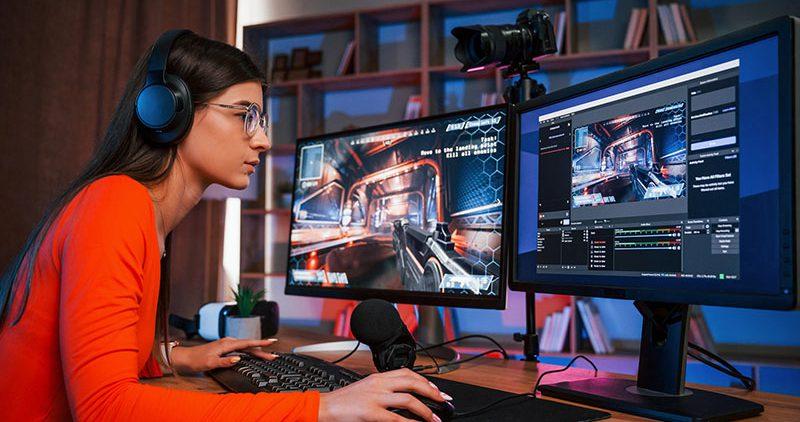
Digital Arts & Animation BS | Online Degree
Where You Could Be After Graduation
Digital Arts and Computer Animation professionals create special effects, animation, or other visual images using film, video, computers, or other electronic tools and media for use in products or creations, such as computer games, movies, music videos, and commercials.
Individuals with Digital Arts and Computer Animation training may find employment in a wide range of interesting and rewarding positions, including:
• 3D Animator, Modeler or Generalist
• Multimedia/VFX Artist
• Video Game Designer
• Art Director
Individuals with Digital Arts and Computer Animation training may find employment in a wide range of interesting and rewarding positions, including:
• 3D Animator, Modeler or Generalist
• Multimedia/VFX Artist
• Video Game Designer
• Art Director

Program Outline and Course Descriptions
The Bachelor of Science degree in Digital Arts and Computer Animation prepares students for a multi-faceted career in the animation industry, including video game development, feature film animation, and visual effects creation. The goal of the program is to help students develop the creative and technical skills essential to pursuing a successful career in the computer animation industry. Students acquire fundamental and advanced techniques used throughout the computer animation industry by conducting research, practical application, and self-development. Students use industry-standard software to explore different techniques used to model, texture, rig, animate, and render digital works of art. Students also develop a portfolio that can be used to seek employment within the industry.

Program Length
The Digital Arts and Computer Animation Bachelor of Science Degree program is 190 quarter credits and can be completed in four (4) years if the student attends all terms full time and consecutively.

Program Outline
|
GENERAL EDUCATION
|
|
|
|
LAU100
|
College Orientation
|
5
|
|
BUS200
|
Business Communications
|
5
|
|
BIO200
|
Life Science
|
5
|
|
PSY140
|
Introduction to Psychology
|
5
|
|
SOC120
|
Introduction to Sociology
|
5
|
|
MTH101
|
Introductory Algebra
|
5
|
|
MTH240
|
Statistics
|
5
|
|
PHY200
|
Physical Science
|
5
|
|
ENG100
|
English Composition I
|
5
|
|
ENG200
|
English Composition II
|
5
|
|
ENG305
|
Speech and Rhetoric
|
5
|
|
HUM200
|
World History
|
5
|
|
Total General Education
|
|
60
|
|
PROGRAM CORE
|
|
|
|
BUS150
|
Entrepreneurship
|
5
|
|
DGN100
|
Design 1
|
5
|
|
DGN110
|
Design 2
|
5
|
|
DIG101
|
Animation Foundations
|
5
|
|
DIG110
|
Digital illustration
|
5
|
|
DIG120
|
Introduction to Color Theory
|
5
|
|
DIG130
|
Introduction to Modeling
|
5
|
|
DIG160
|
Introduction to Animation
|
5
|
|
DIG200
|
Motion Graphics
|
5
|
|
DIG210
|
Introduction to Shading and Lighting
|
5
|
|
DIG220
|
Introduction to Rigging
|
5
|
|
DIG230
|
Introduction to Digital Sculpting
|
5
|
|
DIG305
|
Character Creation 1
|
5
|
|
DIG310
|
Advanced Image Editing
|
5
|
|
DIG315
|
Advanced Texture and Shader Creation
|
5
|
|
DIG320
|
Digital Compositing
|
5
|
|
DIG335
|
Character Rigging
|
5
|
|
DIG345
|
Game Development
|
5
|
|
DIG370
|
Advanced Animation
|
5
|
|
DIG405
|
Animation for Games
|
5
|
|
DIG415
|
Character Creation 2
|
5
|
|
DIG420
|
Game Asset Creation
|
5
|
|
DIG430
|
Scene Creation
|
5
|
|
DIG440
|
Environmental Modeling
|
5
|
|
PMT255
|
Project Management
|
5
|
|
WDD110
|
Digital Graphics
|
5
|
|
Total Core Education
|
|
130
|
|
Total Credit Hours
|
|
190
|
|
The academic year is defined as 3 Quarters and 36 quarter credits.
• *Students enrolled in Nevada must take POL 210, 1 Quarter Unit at no tuition cost, in addition to the courses listed in the program outline. The total amount of credit hours for NV residents for this program is 191. |
|
|

Program Outcomes
Upon completion of the Bachelor of Science in Digital Arts and Computer Animation, students should be able to:
• Develop design solutions for use in visual communication.
• Formulate solutions to complex design and visualization problems, analyzing their effectiveness throughout the creative process.
• Apply principles of design, color theory, and composition to create 3D computer graphics for various media outputs.
• Create 3D graphic images utilizing industry-standard software and techniques.
• Demonstrate expertise in one or more areas of the animation pipeline.
• Develop design solutions for use in visual communication.
• Formulate solutions to complex design and visualization problems, analyzing their effectiveness throughout the creative process.
• Apply principles of design, color theory, and composition to create 3D computer graphics for various media outputs.
• Create 3D graphic images utilizing industry-standard software and techniques.
• Demonstrate expertise in one or more areas of the animation pipeline.

Course Descriptions
GENERAL EDUCATION
LAU100 College Orientation
This course introduces students to the skills and strategies needed for success in college and beyond. Topics include goal setting, time management, effective study techniques, and critical thinking. Students will explore resources available to support academic and career growth while developing skills in communication, collaboration, and self-advocacy. By the end of the course, students will be prepared to navigate their academic journey with confidence and apply essential success strategies in both educational and professional settings.
BUS200 Business Communications
This course focuses on effective communication in professional settings, including written, verbal, and digital correspondence. Topics include business writing, presentations, and professional etiquette. Students will develop skills in crafting clear, concise, and persuasive business messages. By the end of the course, students will be able to communicate effectively in diverse workplace scenarios.
BIO200 Life Science
This course provides an introduction to biological concepts, including cell biology, genetics, evolution, and ecology. Students will explore the scientific method and its applications in understanding living organisms. By the end of the course, students will have a fundamental understanding of biological systems and their impact on the environment.
PSY140 Introduction to Psychology
Students will explore fundamental concepts of psychology, including human behavior, cognition, development, and mental health. This course examines psychological theories and their real-world applications. By the end of the course, students will be able to analyze psychological influences on behavior and decision-making.
SOC120 Introduction to Sociology
This course explores the study of human society, culture, and social behavior. Topics include social structures, group dynamics, institutions, and social change. Students will examine how cultural, economic, and political factors shape individual and group experiences. By the end of the course, students will be able to apply sociological concepts to analyze societal trends and current events.
MTH101 Introductory Algebra
This course introduces students to fundamental algebraic concepts, including equations, inequalities, functions, and graphing. Students will develop problem-solving skills through real-world applications of algebra, preparing them for more advanced mathematical concepts. By the end of the course, students will have a strong foundation in algebra to support future coursework in business, science, and technology.
MTH240 Statistics
This course introduces students to statistical concepts and their applications in decision-making. Topics include probability, data analysis, hypothesis testing, and interpretation of results. Students will develop critical thinking skills through real-world statistical problems and case studies. By the end of the course, students will be able to collect, analyze, and present data effectively in academic and professional settings.
PHY200 Physical Science
Students will explore the principles of physics and chemistry, including motion, energy, atomic structure, and chemical reactions. This course emphasizes real-world applications of physical science concepts. By the end of the course, students will be able to apply scientific reasoning to analyze natural phenomena.
ENG100 English Composition I
This course focuses on developing strong writing and critical thinking skills through various forms of written communication. Students will learn to craft clear, well-structured essays, conduct research, and use proper citation methods. Emphasis is placed on organizing ideas, developing arguments, and refining grammar and style. By the end of the course, students will be able to produce well-reasoned, coherent written work for academic and professional purposes.
ENG200 English Composition II
Building on English Composition I, this course focuses on advanced writing, research, and analytical skills. Students will engage in critical reading, argumentative writing, and research-based projects. Emphasis is placed on effective communication, persuasive writing, and academic integrity. By the end of the course, students will be able to craft well-researched, compelling arguments across various disciplines.
ENG305 Speech and Rhetoric
This course explores the principles of effective public speaking and persuasive communication. Students will develop skills in speech writing, delivery, and audience engagement. Topics include rhetorical strategies, speech structure, and presentation techniques. By the end of the course, students will be able to craft and deliver compelling speeches for academic, professional, and public settings.
HUM200 World History
This course provides an overview of key historical events, civilizations, and cultural developments across the world. Topics include ancient civilizations, the Industrial Revolution, and modern global conflicts. Students will explore historical perspectives on social, economic, and political change. By the end of the course, students will be able to analyze historical trends and their impact on contemporary society.
PROGRAM CORE
BUS150 Entrepreneurship
This course introduces students to the principles of entrepreneurship, including business planning, funding, and market analysis. Students will explore the challenges and opportunities of starting and managing a small business. By the end of the course, students will develop a business concept and apply entrepreneurial strategies to real-world scenarios.
DGN100 Design I
This course introduces design theory and practices used in visual design and communication. Topics focus around developing the fundamental knowledge of design elements and design principles and their application in visual communication. These design fundamentals are universal across all forms of visual design; allowing their use in a variety of industries to aid in visual design solutions.
DGN110 Design II
This course expands on design theory and practices used in visual design covered in previous courses while introducing additional design components. Topics focus on developing knowledge of; design elements, design principles, gestalt principles, color theory, typography, and conceptualization. Project throughout the course will guide students on utilizing a variety of design components through practical application of 2D and 3D design solutions.
DIG101 Animation Foundations
This comprehensive course provides an introduction to Maya software, covering the fundamentals of 2D and 3D animation and its application in video game development. Students will become familiar with Maya’s interface, including menus, panels, and essential tools. Through hands-on learning, they will develop a foundational understanding of Maya, preparing them for more advanced coursework in the program.
DIG110 Digital Illustration
This course introduces students to drawing and design within a digital workspace, blending traditional artistic foundations with modern digital techniques. Emphasizing core skills in drawing and painting, it explores digital image creation methods widely used in contemporary design. Covering concepts from various artistic disciplines, the course equips students with a diverse skill set and insight into the techniques behind some of the world’s most renowned artworks.
DIG120 Introduction to Color Theory
This course guides students through the principles of light and its role in creating color. Students will explore the science behind color perception and how light enables us to see and interpret colors. Topics may include the color spectrum, the behavior of light through reflection, refraction, and absorption, as well as key concepts such as value, hue, saturation, color harmony, and contrast.
DIG130 Introduction to Modeling
This course introduces students to the fundamentals of polygon modeling in Maya, focusing on the techniques used to create and refine 3D models. Students will explore the principles of polygonal topology, edge flow, and efficient geometry construction. The course covers essential modeling tools and workflows, including extruding, beveling, bridging, and manipulating vertices, edges, and faces. Students will also learn best practices for hard surface and organic modeling, developing a strong foundation in 3D asset creation for animation, games, and visual effects.
DIG160 Introduction to Animation
In this class students will look at Animation software and learn basic concept of animation. Students will learn how to plan, create, and refine animations. Furthermore, students will also learn about the history of animation.
DIG200 Motion Graphics
In this course, students will explore motion graphics tools and gain insight into the motion graphics industry. They will learn to design and animate engaging visuals, incorporating dynamic text, title sequences, and credit animations. Through hands-on projects, students will develop the skills needed to create compelling motion graphics for various media, including film, television, and digital platforms.
DIG210 Introduction to Shading and Lighting
This course introduces students to the fundamentals of UV mapping, texturing, materials, lighting, and rendering in Maya. Students will expand their proficiency with the software as they explore essential tools and techniques for applying textures, creating materials, and setting up lighting for 3D scenes. The course covers shading, camera setup, and layering techniques to enhance visual quality.
DIG220 Introduction to Rigging
This course introduces students to the fundamentals of rigging in Maya, focusing on connections, joint systems, IK and FK controls, and deformers. Students will learn how to develop skeletal structures and animation controls for a variety of objects, including characters, props, and mechanical rigs. The course covers key techniques such as binding, weight painting, and setting up controls to create dynamic and functional rigs. Students will explore how joints and deformers influence movement, gaining hands-on experience in designing and implementing rigs for both organic and mechanical models.
DIG230 Introduction to Digital Sculpting
This course introduces students to the fundamentals of digital sculpting using ZBrush. Students will learn how to create and refine 3D models, starting with a base mesh in Maya and enhancing details within ZBrush. The course covers key topics such as interface navigation, sculpting techniques, texturing workflows, and exporting normal and displacement maps for integration into Maya.
DIG305 Character Creation 1
In this course, students will learn to create 3D character models using industry-standard techniques for games and film. They will explore the differences between organic modeling and hard surface modeling, building on their previous knowledge to develop efficient workflows. The course focuses on refining shapes, topology, and detailing methods to create expressive and stylized character models.
DIG310 Advanced Image Editing
This course provides an in-depth exploration of Photoshop’s advanced capabilities, focusing on non-destructive workflows that enhance flexibility and efficiency. Students will learn techniques that allow for easy adjustments, catering to the needs of art directors and production environments. The course covers value painting, blending modes, and advanced photo manipulation techniques, equipping students with the skills to create and refine digital artwork with precision and adaptability.
DIG315 Advanced Texture and Shader Creation
This advanced course builds on the foundational concepts introduced in the previous rendering course, guiding students through the next phase of the 3D animation pipeline. The primary focus is on developing and applying texture maps, shaders, and material networks to enhance 3D models. Students will explore advanced UV layout techniques, texture painting methods, and shader development processes to create visually rich and optimized assets.
DIG320 Digital Compositing
This course will introduce students to the fundamental aspects of digital compositing. Students will learn how to combine live film with digital renderings so that they blend seamlessly. Topics that will be covered in this class are advanced Green Screen techniques, rotoscoping, camera matching, and a multitude of advanced compositing techniques to make film shots blend seamlessly together.
DIG335 Character Rigging
This advanced rigging course builds on foundational concepts, focusing on the creation and implementation of animation rigs for a variety of 3D assets. From characters to mechanical objects, students will explore techniques for controlling movement, rotation, squash, and stretch. The course covers character rigging, mechanical rigging, and skinning techniques used in both film and video game production, providing hands-on experience in developing flexible and efficient animation rigs.
DIG345 Game Development
This course introduces students to video game creation using Maya. Students will learn to build environments, animate assets, and apply motion and controls within a game setting. The course covers essential techniques in modeling, animation, and rendering, focusing on creating interactive levels and effects. Through hands-on projects, students will develop a functional and engaging final game.
DIG370 Advanced Animation
This course explores the role of acting in animation, emphasizing the importance of body language, emotion, and performance. Students will learn how to record their own movements as reference for animation and analyze what makes a performance believable.
DIG405 Animation for Games
This course examines the key differences between game animation and cinematic animation, focusing on game-specific movements rather than character acting. Students will create animations such as walk cycles, combat actions, and jumps, ensuring characters move convincingly through 3D space from all angles.
DIG415 Character Creation 2
This course guides students through the process of creating rounded, organic shapes in Maya. Building on foundational modeling skills, students will focus on advanced techniques for developing smooth, natural forms. The course explores methods for refining topology and preparing models for seamless integration into rigging and animation workflows.
DIG420 Game Asset Creation
This course focuses on modeling and texturing game assets, emphasizing techniques for creating optimized, high-quality models. Students will learn the differences between film and game modeling, including working within polycount constraints and maintaining strong silhouettes for effective game design. The course also covers industry-standard texturing methods, exploring how different texture maps enhance game assets for various genres and platforms.
DIG430 3D Scene Creation
This course builds on students’ skills in modeling and texturing by introducing advanced techniques in UV mapping, composition, lighting, material setup, and rendering. Students will gain hands-on experience with industry-standard rendering software, learning how to create complex shading networks and advanced lighting effects. The course emphasizes high-quality image production, guiding students through the process of crafting compelling compositions and achieving professional-level renders used in the visual effects industry.
DIG440 Environmental Modeling
This intensive course focuses on environmental modeling, introducing students to various techniques and workflows for creating detailed indoor and outdoor environments using industry-standard animation software. Students will explore efficient modeling methods, asset optimization, and texturing strategies to build immersive and visually compelling environments. The course emphasizes best practices for structuring scenes, managing complexity, and preparing assets for integration into games, animation, or visual effects projects.
PMT255 Project Management
Students will learn project planning, scheduling, budgeting, and risk management techniques. This course covers industry-standard project management tools and best practices. By the end of the course, students will be able to create project plans and manage resources effectively.
WDD110 Digital Graphics
This course introduces students to Adobe Photoshop, the fundamental graphics application and image editing software used in the computer graphics industry. Students learn the fundamentals of this software, and will study topics including selections, layers, masking, filters, image manipulation and correction, composition, painting, and optimization for the web. Students examine techniques for efficient editing, processing, and file handling. Topics in photo editing may be studied, including color enhancement, lighting correction, and overall retouching.
LAU100 College Orientation
This course introduces students to the skills and strategies needed for success in college and beyond. Topics include goal setting, time management, effective study techniques, and critical thinking. Students will explore resources available to support academic and career growth while developing skills in communication, collaboration, and self-advocacy. By the end of the course, students will be prepared to navigate their academic journey with confidence and apply essential success strategies in both educational and professional settings.
BUS200 Business Communications
This course focuses on effective communication in professional settings, including written, verbal, and digital correspondence. Topics include business writing, presentations, and professional etiquette. Students will develop skills in crafting clear, concise, and persuasive business messages. By the end of the course, students will be able to communicate effectively in diverse workplace scenarios.
BIO200 Life Science
This course provides an introduction to biological concepts, including cell biology, genetics, evolution, and ecology. Students will explore the scientific method and its applications in understanding living organisms. By the end of the course, students will have a fundamental understanding of biological systems and their impact on the environment.
PSY140 Introduction to Psychology
Students will explore fundamental concepts of psychology, including human behavior, cognition, development, and mental health. This course examines psychological theories and their real-world applications. By the end of the course, students will be able to analyze psychological influences on behavior and decision-making.
SOC120 Introduction to Sociology
This course explores the study of human society, culture, and social behavior. Topics include social structures, group dynamics, institutions, and social change. Students will examine how cultural, economic, and political factors shape individual and group experiences. By the end of the course, students will be able to apply sociological concepts to analyze societal trends and current events.
MTH101 Introductory Algebra
This course introduces students to fundamental algebraic concepts, including equations, inequalities, functions, and graphing. Students will develop problem-solving skills through real-world applications of algebra, preparing them for more advanced mathematical concepts. By the end of the course, students will have a strong foundation in algebra to support future coursework in business, science, and technology.
MTH240 Statistics
This course introduces students to statistical concepts and their applications in decision-making. Topics include probability, data analysis, hypothesis testing, and interpretation of results. Students will develop critical thinking skills through real-world statistical problems and case studies. By the end of the course, students will be able to collect, analyze, and present data effectively in academic and professional settings.
PHY200 Physical Science
Students will explore the principles of physics and chemistry, including motion, energy, atomic structure, and chemical reactions. This course emphasizes real-world applications of physical science concepts. By the end of the course, students will be able to apply scientific reasoning to analyze natural phenomena.
ENG100 English Composition I
This course focuses on developing strong writing and critical thinking skills through various forms of written communication. Students will learn to craft clear, well-structured essays, conduct research, and use proper citation methods. Emphasis is placed on organizing ideas, developing arguments, and refining grammar and style. By the end of the course, students will be able to produce well-reasoned, coherent written work for academic and professional purposes.
ENG200 English Composition II
Building on English Composition I, this course focuses on advanced writing, research, and analytical skills. Students will engage in critical reading, argumentative writing, and research-based projects. Emphasis is placed on effective communication, persuasive writing, and academic integrity. By the end of the course, students will be able to craft well-researched, compelling arguments across various disciplines.
ENG305 Speech and Rhetoric
This course explores the principles of effective public speaking and persuasive communication. Students will develop skills in speech writing, delivery, and audience engagement. Topics include rhetorical strategies, speech structure, and presentation techniques. By the end of the course, students will be able to craft and deliver compelling speeches for academic, professional, and public settings.
HUM200 World History
This course provides an overview of key historical events, civilizations, and cultural developments across the world. Topics include ancient civilizations, the Industrial Revolution, and modern global conflicts. Students will explore historical perspectives on social, economic, and political change. By the end of the course, students will be able to analyze historical trends and their impact on contemporary society.
PROGRAM CORE
BUS150 Entrepreneurship
This course introduces students to the principles of entrepreneurship, including business planning, funding, and market analysis. Students will explore the challenges and opportunities of starting and managing a small business. By the end of the course, students will develop a business concept and apply entrepreneurial strategies to real-world scenarios.
DGN100 Design I
This course introduces design theory and practices used in visual design and communication. Topics focus around developing the fundamental knowledge of design elements and design principles and their application in visual communication. These design fundamentals are universal across all forms of visual design; allowing their use in a variety of industries to aid in visual design solutions.
DGN110 Design II
This course expands on design theory and practices used in visual design covered in previous courses while introducing additional design components. Topics focus on developing knowledge of; design elements, design principles, gestalt principles, color theory, typography, and conceptualization. Project throughout the course will guide students on utilizing a variety of design components through practical application of 2D and 3D design solutions.
DIG101 Animation Foundations
This comprehensive course provides an introduction to Maya software, covering the fundamentals of 2D and 3D animation and its application in video game development. Students will become familiar with Maya’s interface, including menus, panels, and essential tools. Through hands-on learning, they will develop a foundational understanding of Maya, preparing them for more advanced coursework in the program.
DIG110 Digital Illustration
This course introduces students to drawing and design within a digital workspace, blending traditional artistic foundations with modern digital techniques. Emphasizing core skills in drawing and painting, it explores digital image creation methods widely used in contemporary design. Covering concepts from various artistic disciplines, the course equips students with a diverse skill set and insight into the techniques behind some of the world’s most renowned artworks.
DIG120 Introduction to Color Theory
This course guides students through the principles of light and its role in creating color. Students will explore the science behind color perception and how light enables us to see and interpret colors. Topics may include the color spectrum, the behavior of light through reflection, refraction, and absorption, as well as key concepts such as value, hue, saturation, color harmony, and contrast.
DIG130 Introduction to Modeling
This course introduces students to the fundamentals of polygon modeling in Maya, focusing on the techniques used to create and refine 3D models. Students will explore the principles of polygonal topology, edge flow, and efficient geometry construction. The course covers essential modeling tools and workflows, including extruding, beveling, bridging, and manipulating vertices, edges, and faces. Students will also learn best practices for hard surface and organic modeling, developing a strong foundation in 3D asset creation for animation, games, and visual effects.
DIG160 Introduction to Animation
In this class students will look at Animation software and learn basic concept of animation. Students will learn how to plan, create, and refine animations. Furthermore, students will also learn about the history of animation.
DIG200 Motion Graphics
In this course, students will explore motion graphics tools and gain insight into the motion graphics industry. They will learn to design and animate engaging visuals, incorporating dynamic text, title sequences, and credit animations. Through hands-on projects, students will develop the skills needed to create compelling motion graphics for various media, including film, television, and digital platforms.
DIG210 Introduction to Shading and Lighting
This course introduces students to the fundamentals of UV mapping, texturing, materials, lighting, and rendering in Maya. Students will expand their proficiency with the software as they explore essential tools and techniques for applying textures, creating materials, and setting up lighting for 3D scenes. The course covers shading, camera setup, and layering techniques to enhance visual quality.
DIG220 Introduction to Rigging
This course introduces students to the fundamentals of rigging in Maya, focusing on connections, joint systems, IK and FK controls, and deformers. Students will learn how to develop skeletal structures and animation controls for a variety of objects, including characters, props, and mechanical rigs. The course covers key techniques such as binding, weight painting, and setting up controls to create dynamic and functional rigs. Students will explore how joints and deformers influence movement, gaining hands-on experience in designing and implementing rigs for both organic and mechanical models.
DIG230 Introduction to Digital Sculpting
This course introduces students to the fundamentals of digital sculpting using ZBrush. Students will learn how to create and refine 3D models, starting with a base mesh in Maya and enhancing details within ZBrush. The course covers key topics such as interface navigation, sculpting techniques, texturing workflows, and exporting normal and displacement maps for integration into Maya.
DIG305 Character Creation 1
In this course, students will learn to create 3D character models using industry-standard techniques for games and film. They will explore the differences between organic modeling and hard surface modeling, building on their previous knowledge to develop efficient workflows. The course focuses on refining shapes, topology, and detailing methods to create expressive and stylized character models.
DIG310 Advanced Image Editing
This course provides an in-depth exploration of Photoshop’s advanced capabilities, focusing on non-destructive workflows that enhance flexibility and efficiency. Students will learn techniques that allow for easy adjustments, catering to the needs of art directors and production environments. The course covers value painting, blending modes, and advanced photo manipulation techniques, equipping students with the skills to create and refine digital artwork with precision and adaptability.
DIG315 Advanced Texture and Shader Creation
This advanced course builds on the foundational concepts introduced in the previous rendering course, guiding students through the next phase of the 3D animation pipeline. The primary focus is on developing and applying texture maps, shaders, and material networks to enhance 3D models. Students will explore advanced UV layout techniques, texture painting methods, and shader development processes to create visually rich and optimized assets.
DIG320 Digital Compositing
This course will introduce students to the fundamental aspects of digital compositing. Students will learn how to combine live film with digital renderings so that they blend seamlessly. Topics that will be covered in this class are advanced Green Screen techniques, rotoscoping, camera matching, and a multitude of advanced compositing techniques to make film shots blend seamlessly together.
DIG335 Character Rigging
This advanced rigging course builds on foundational concepts, focusing on the creation and implementation of animation rigs for a variety of 3D assets. From characters to mechanical objects, students will explore techniques for controlling movement, rotation, squash, and stretch. The course covers character rigging, mechanical rigging, and skinning techniques used in both film and video game production, providing hands-on experience in developing flexible and efficient animation rigs.
DIG345 Game Development
This course introduces students to video game creation using Maya. Students will learn to build environments, animate assets, and apply motion and controls within a game setting. The course covers essential techniques in modeling, animation, and rendering, focusing on creating interactive levels and effects. Through hands-on projects, students will develop a functional and engaging final game.
DIG370 Advanced Animation
This course explores the role of acting in animation, emphasizing the importance of body language, emotion, and performance. Students will learn how to record their own movements as reference for animation and analyze what makes a performance believable.
DIG405 Animation for Games
This course examines the key differences between game animation and cinematic animation, focusing on game-specific movements rather than character acting. Students will create animations such as walk cycles, combat actions, and jumps, ensuring characters move convincingly through 3D space from all angles.
DIG415 Character Creation 2
This course guides students through the process of creating rounded, organic shapes in Maya. Building on foundational modeling skills, students will focus on advanced techniques for developing smooth, natural forms. The course explores methods for refining topology and preparing models for seamless integration into rigging and animation workflows.
DIG420 Game Asset Creation
This course focuses on modeling and texturing game assets, emphasizing techniques for creating optimized, high-quality models. Students will learn the differences between film and game modeling, including working within polycount constraints and maintaining strong silhouettes for effective game design. The course also covers industry-standard texturing methods, exploring how different texture maps enhance game assets for various genres and platforms.
DIG430 3D Scene Creation
This course builds on students’ skills in modeling and texturing by introducing advanced techniques in UV mapping, composition, lighting, material setup, and rendering. Students will gain hands-on experience with industry-standard rendering software, learning how to create complex shading networks and advanced lighting effects. The course emphasizes high-quality image production, guiding students through the process of crafting compelling compositions and achieving professional-level renders used in the visual effects industry.
DIG440 Environmental Modeling
This intensive course focuses on environmental modeling, introducing students to various techniques and workflows for creating detailed indoor and outdoor environments using industry-standard animation software. Students will explore efficient modeling methods, asset optimization, and texturing strategies to build immersive and visually compelling environments. The course emphasizes best practices for structuring scenes, managing complexity, and preparing assets for integration into games, animation, or visual effects projects.
PMT255 Project Management
Students will learn project planning, scheduling, budgeting, and risk management techniques. This course covers industry-standard project management tools and best practices. By the end of the course, students will be able to create project plans and manage resources effectively.
WDD110 Digital Graphics
This course introduces students to Adobe Photoshop, the fundamental graphics application and image editing software used in the computer graphics industry. Students learn the fundamentals of this software, and will study topics including selections, layers, masking, filters, image manipulation and correction, composition, painting, and optimization for the web. Students examine techniques for efficient editing, processing, and file handling. Topics in photo editing may be studied, including color enhancement, lighting correction, and overall retouching.
Get Started Today!

B.S. Digital Arts and Computer Animation Program Tuition

Credit hours: 190
Registration Fee: $100
Technology Package: $2,750 **$2,950.00
Program Fees: $3,800 **6,400.00
CE Fees: $750 **$0.00
Tuition: $76,000
**If first term is 8/3/2026 or later
Registration Fee: $100
Technology Package: $2,750 **$2,950.00
Program Fees: $3,800 **6,400.00
CE Fees: $750 **$0.00
Tuition: $76,000
**If first term is 8/3/2026 or later

LEARNING GOALS
Upon completion of the degree, students will be able to:
• Communication: Students will demonstrate effective oral and written communication skills; communicate concisely, professionally, and accurately in various professional modes, including emails and presentations.
• Critical Thinking: Students will demonstrate critical thinking skills by formulating problems and developing achievable solutions; create, analyze and evaluate appropriate solutions, including those for ambiguous problems; streamline information for relevancy; effectively articulate their thinking processes throughout the problem-solving process.
• Creativity: Students will exhibit a strong understanding of principles of design, color theory, and composition to create captivating 2D and 3D computer graphics, including illustrations, characters, environments, and animations; demonstrate an understanding of the techniques used in planning, developing, and finalizing digital works of art to meet production requirements in a timely manner.
• Proficiency: Students will demonstrate an understanding of the proper workflow for a verity of software used throughout the animation industry, recognize individual software strengths, utilize creative control provided by software, develop a tailored skillset to achieve industry readiness, and apply practical application skillset to real world production problems.
• Specialization: Students will demonstrate skillfulness and problem solving abilities of one or more particular specializations within the animation production pipeline, including, illustration, modeling, texturing, rigging, animation, and compositing for feature film, VFX, and video games.
• Communication: Students will demonstrate effective oral and written communication skills; communicate concisely, professionally, and accurately in various professional modes, including emails and presentations.
• Critical Thinking: Students will demonstrate critical thinking skills by formulating problems and developing achievable solutions; create, analyze and evaluate appropriate solutions, including those for ambiguous problems; streamline information for relevancy; effectively articulate their thinking processes throughout the problem-solving process.
• Creativity: Students will exhibit a strong understanding of principles of design, color theory, and composition to create captivating 2D and 3D computer graphics, including illustrations, characters, environments, and animations; demonstrate an understanding of the techniques used in planning, developing, and finalizing digital works of art to meet production requirements in a timely manner.
• Proficiency: Students will demonstrate an understanding of the proper workflow for a verity of software used throughout the animation industry, recognize individual software strengths, utilize creative control provided by software, develop a tailored skillset to achieve industry readiness, and apply practical application skillset to real world production problems.
• Specialization: Students will demonstrate skillfulness and problem solving abilities of one or more particular specializations within the animation production pipeline, including, illustration, modeling, texturing, rigging, animation, and compositing for feature film, VFX, and video games.
DEGREE OVERVIEW
Program Structure
The Digital Arts and Computer Animation, Bachelor of Science (B.S.) program is 190 quarter credits and can be completed in four (4) years if the student attends all terms consecutively.
Instructional Method
The Digital Arts and Computer Animation, Bachelor of Science (B.S.) program is practical application and involves intense online interactive learning. All classes are lecture based with learning activities and practical application laboratory for students to enhance their skills and abilities. Interactive virtual classrooms are part of the instructional process at Laurus College. Instruction may be supplemented with guest speakers in class.
The Digital Arts and Computer Animation, Bachelor of Science (B.S.) program is 190 quarter credits and can be completed in four (4) years if the student attends all terms consecutively.
Instructional Method
The Digital Arts and Computer Animation, Bachelor of Science (B.S.) program is practical application and involves intense online interactive learning. All classes are lecture based with learning activities and practical application laboratory for students to enhance their skills and abilities. Interactive virtual classrooms are part of the instructional process at Laurus College. Instruction may be supplemented with guest speakers in class.

CREATIVE LEARNING
Communication and Critical Thinking Skills
Students in the Digital Arts and Computer Animation, Bachelor of Science (B.S.) program complete challenging projects and assignments by using creative problem solving skills. Students communicate ideas through written and oral presentations in various courses throughout the program.
Completion Requirements
Students wishing to obtain the Digital Arts and Computer Animation, Bachelor of Science (B.S.) from Laurus College need to meet all program completion requirements. Students must have completed a minimum of 190 quarter credits, and be in good academic standing with a cumulative GPA of 2.0 or better to be eligible for the Digital Arts and Computer Animation, Bachelor of Science (B.S.).
Students in the Digital Arts and Computer Animation, Bachelor of Science (B.S.) program complete challenging projects and assignments by using creative problem solving skills. Students communicate ideas through written and oral presentations in various courses throughout the program.
Completion Requirements
Students wishing to obtain the Digital Arts and Computer Animation, Bachelor of Science (B.S.) from Laurus College need to meet all program completion requirements. Students must have completed a minimum of 190 quarter credits, and be in good academic standing with a cumulative GPA of 2.0 or better to be eligible for the Digital Arts and Computer Animation, Bachelor of Science (B.S.).
At Laurus College, the faculty is the backbone of their mission to "prepare every student for success in a changing world." When you look through their profiles, you aren’t just seeing academic credentials; you’re seeing a collection of seasoned professionals who have transitioned from the boardroom, the hospital, and the tech lab into the classroom.
View Our Program Instructors
Accreditations and Approvals